A Forgotten Seer, Seen at Last: A Response to Theatre Production, ‘Mantsopa’
It goes without saying that to be a woman marginalised by history is to have been a fearless revolutionary...
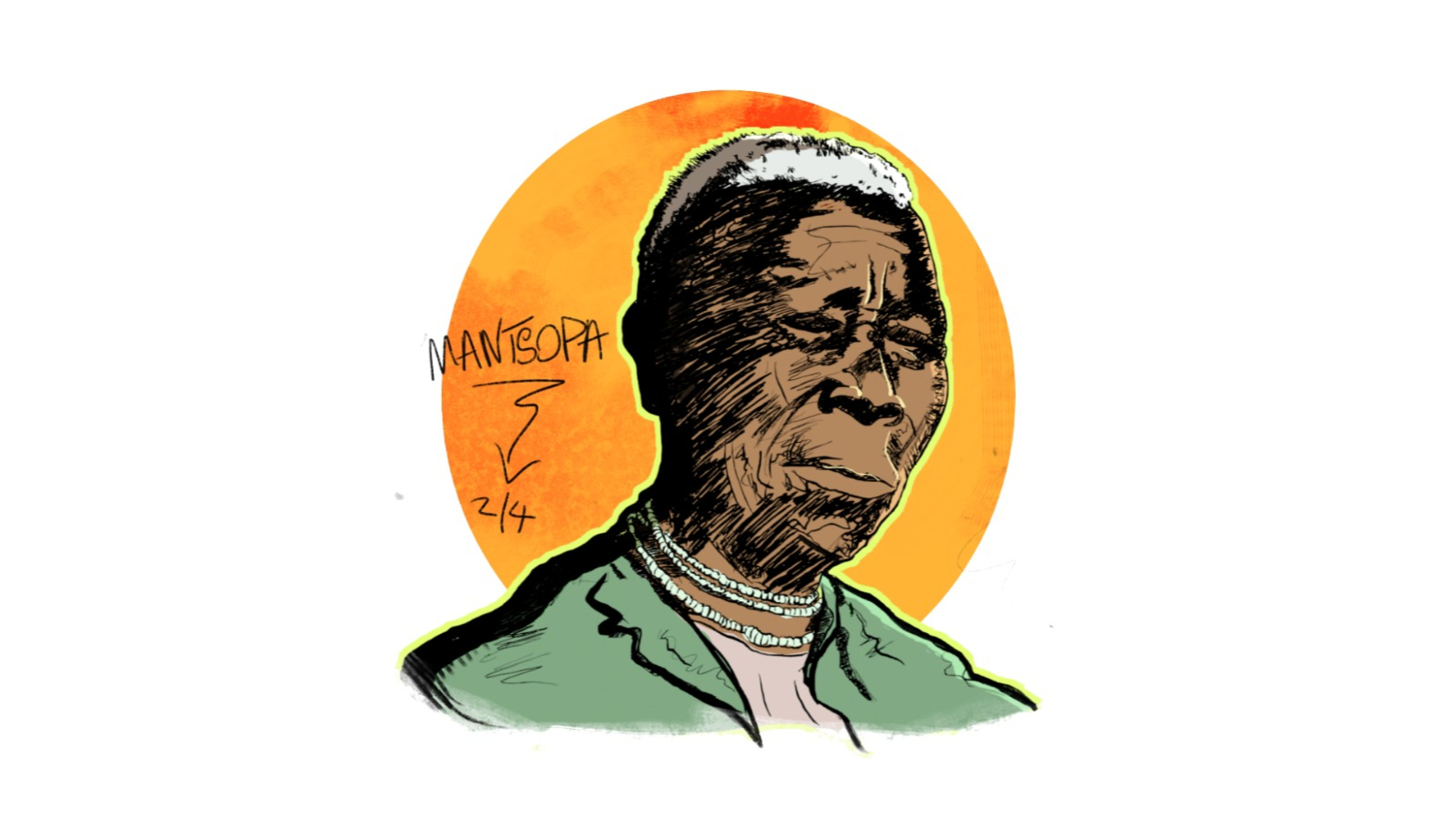
It goes without saying that to be a woman marginalised by history is to have been a fearless revolutionary, and to thereafter be consigned to obscurity means that the memory of you, however faint or fragmented, reveals an uncomfortable hidden social truth about the state of your community, their collective fears and desires, even over a century after your death.
The memory of one woman continues to instil unease in the lives of present-day Basotho people. This unease comes across in the way Kgaiyane (KG), a delightfully quick-witted character from a theatre production titled ‘Mantsopa’, trembles at the mere mention of that particular woman’s name, or why this same woman’s fictional great-granddaughter, Tholoana Makhetha, refuses to utter it out of fear of the power it holds. This name is of the unsung Mosotho prophetess ‘Mantsopa Anna Makhetha—a rainmaker, storyteller, diviner and seer born somewhere near the Mohokare River in 1793. Nkhono ‘Mantsopa was an advisor to the founder of the Basotho nation, King Moshoeshoe I. She is said to have warned the Basotho of what the theatre production terms ‘white butterflies’, signifying a group of British colonial forces that advanced towards Basotho territory in what would become the Battle of Viervoet (1851). ‘Mantsopa is said to have had the ability to heal people through song, yet ‘unsung’ feels like the right word to use to describe her, given that her various predictions, including those about the outcome of war, were said to be dismissed by others, including European missionaries. Over a hundred years later, there is a reason you will not hear her mentioned in political or cultural discourse. Could it be that history is considered neither notable nor heroic to society when it is shaped by a woman, or that our modern values have hampered our understanding of the tradition and spirituality Nkhono ‘Mantsopa stood for? In a society shaped by colonial history, these are the exact questions worth asking ourselves in order to understand ourselves.
It should be noted that signs of ‘Mantsopa’s influence remain intact in present day South Africa. You’ll find one of the few vestiges of her life at a pilgrimage site in Modderpoort in the eastern part of the Free State province. There’s a weathered headstone with grass and weeds curling into the cracked body of the large structure. Her grave may be time-worn, but she’s still here—embedded into the identities of you and I, and in the memories of the few who travel from distant lands to make offerings to this woman they never really knew. Writer, actor and director Jerry Mofokeng wa Makhetha’s offering comes in the form of art. Against the odds, Nkhono ‘Mantsopa’s story, and that of her similarly clairvoyant fictional descendant Tholoana was adapted for the stage by Mofokeng wa Makhetha at The Market Theatre in Newtown, Johannesburg from April 30 to May 11, 2025.
Despite how much time has gone by since May 2025, the play still offers a lot to unpack. As a commentary on it, this written piece contends that some modern and young Basotho people do not engage with their past, nor do they find it fashionable to do so. For the purposes of this piece, it is fitting that you—the Basotho readers, and I—a Mosotho writer, are symbolically represented by the fictional character Tholoana, ‘Mantsopa’s troubled descendant who is so strongly resistant to accepting her personal history and the responsibilities conferred upon her by her ancestor, that she travels to Johannesburg, the African hub of modernity, and pretends as if she doesn’t have the pressing responsibility of upholding her own culture and tradition in the modern world. What I am saying is that symbolically speaking, Tholoana’s dismissive response to ‘Mantsopa is hauntingly congruent with our own youth’s engagement (or lack thereof) with their own culture and tradition.
I saw the play on the afternoon of Saturday, May 10th, 2025 and these are some of my findings:
The play unfolds largely through protagonist Tholoana’s journey to self-discovery, and I find that the stage production is meant to guide us—Basotho—along that same path. Tholoana is played by acclaimed musician Leomile Motsetsela, who in spirit of the role, enacts the story of how the lead character nearly crushes under the weight of her ancestor ‘Mantsopa’s name, legacy, and the prophetic abilities she inherits through lineage. If you are anything like the version of Tholoana at the beginning of the play, Basotho customs and practices are not really your thing—they are ‘too rigid and overwhelming’ you are thinking—but that is somewhat warranted, given the contemporary world we live in. Rather, you are hungry for a shot at something more exciting like modern music. Along with her musical inclinations, Tholoana studies psychology at tertiary level, an indicator of her reliance on scientific reasoning to navigate her youth. Like many, her personal interests and studies have cultivated a scepticism and rationalism that is not easy to shake. She receives a job offer to sing at a night club in Johannesburg, and so she does what most people her age (twenties, give or take) would do—she abandons tradition by tuning out ‘Mantsopa’s ancestral calls and pursues her musical dream. What she doesn’t know however, is that the journey to self-discovery begins with self-awareness, and the trying thing about Tholoana is that she is avoidant, fearful, and neither self-aware nor contemplative about accepting her prophetic gift from ‘Mantsopa. Her indifference escalates enough that her mother ‘Matholoana, played by prolific actress Florence Masebe, delivers a heartfelt monologue about it, and for a fleeting moment you start to think that her soul-stirring words will sway Tholoana somehow. They don’t. What the monologue ultimately does however, is reveal that elderly Basotho people like Matholoana continue to serve as custodians of Basotho history in present-day Lesotho and South Africa but there is a disinclination on our youth’s part to partake in intergenerational learning.
Despite Tholoana’s wilful disregard for ‘Mantsopa, the prophetess pervades the stage where the cast delivers their performance. Over the course of the play, I keep peering up at this chilling, giant portrait of ‘Mantsopa herself hanging on the stage backdrop and coloured in fluorescent paint. If you look up ‘Mantsopa’ on your internet search engine, you’ll find the same image of her face, fixing her eyes on something in the distance. The large mural towering over the performers and the audience is a symbol of ‘Mantsopa’s ever-present history we don’t seem to engage with, watching and waiting for us to confront it. It turns out that this wilful disregard for our history is not just exclusive to ‘Mantsopa because it applies more broadly to other historical figures like King Moshoeshoe the First. As a case in point, it is likely that you have heard of Shaka Zulu, given that his origin story has been documented several times: through a 1986 TV miniseries starring Henry Cele and a Showmax original series in 2023, but a Basotho TV series, movie, fictional text, or an in-depth discussion about King Moshoeshoe the First, and even more unlikely, about ‘Mantsopa, a woman? Good luck finding them.
Beyond that, the play masterfully reveals a concerning truth when the character KG, played by the charismatic Tseko Monaheng refuses to utter ‘Mantsopa’s name, fearfully referring to the seer as ‘you-know-who’ out of caution that she’ll spring into being right in front of him and, I don’t know…prophesy his fate? Render him uncharacteristically speechless? Bewitch him? It’s a mystery. Just so we are clear, KG’s display of fear of ‘Mantsopa’s prophetic gift is amusingly absurd, and it is one of the many aspects of the play the actor pulls off hilariously, but the choice to render the seer nameless even if in good fun, reveals an underlying issue: society’s fear of powerful women. Historically, using terms like ‘you-know-who’, ‘he/she-who-cannot-be-named’, and ‘the nameless one’, represents a storytelling archetype that reveals society's discomfort towards a powerful individual’s legacy. In the case of ‘Mantsopa, the characters’ fear of her name and spirituality exposes our society’s wilful disregard for her history and what she represents. While it is evident that the play seeks to portray ‘Mantsopa as a powerful presence whose name should be respected and honoured in the present day, it also reveals that her name, in the eyes of society, carries with it a threat and danger, therefore rendering her nameless strips away her humanity and builds a cultural taboo around a history that we know we should be talking about more.
Another strength of the play is that it seeks and succeeds to give Basotho people a little shake, to wake us up from our sleep, and it does so through striking visuals and the help of the carefully designed costumes, the dreamlike stage lighting, and realistic props. However, given that I had already made up my mind that Tholoana’s journey parallels the journey of present-day Basotho youth, I expected its ending to ultimately offer ideas to resolve the issue of our youth’s disinterest in their history. The play sees Mohato, her love interest played by actor Lebohang Banyane, pressing her to embrace her prophetic gift in alignment with his name (which translates to ‘he who takes a step forward or progresses in life’) to which she is expectedly disinclined to accept, until the very end, where Mohato follows her to Johannesburg. Mohato is the one who changes everything for Tholoana. His encouragement, coupled with the disruption the ancestral calls cause in her comfortable modern life is what compels her to eventually quit her job at the night club and accept her personal history. Despite the obvious shift in the ending, I cannot escape the thought that not all of us have a Mohato or a ‘Matholoana pressing us to remember the unacknowledged aspects of Basotho history on a daily basis, therefore the significance of Tholoana’s turning point and how it should reflect our own lives might go unnoticed by the audience. As I see it, it is not the play’s responsibility to reform society, however, whatever convinces Tholoana to come to terms with her personal history should convince Basotho youth to also acknowledge, learn and talk about our historical figures and national history.
I cannot ignore that someone who has seen the play might assert, through closer observation, that Tholoana’s turning point is not in Mohato specifically, but in his intoning of Thapelo ea Basotho, a traditional prayer of the Basotho people, while he consoles her at the end of the play. This person might reason that the prayer, which incorporates both a Christian God and Basotho cultural references is what marks a pivotal change because those are two systems ‘Mantsopa stood for, and what the play indirectly seems to imply have to somehow coexist in Tholoana’s modern world. Perhaps this prayer is meant to serve as a bridge between the two worlds of tradition and modernity that Tholoana, and Basotho youth find themselves torn between.
In closing, ignored or seen, historical women figures are still here. As Ethiopian-American writer Maaza Mengiste’s revisionist novel The Shadow King once said, “the dead […] reside in the corners of every memory and rise up, again and again, to resist all our efforts to leave them behind”. This play, fortunately presents Basotho people with a window into where our history resides, and why it is best not to leave it behind. However, it is up to us to choose what will serve as our turning point moment after which our lives are never the same.