Reflections on the Lesotho Literary Tradition (and Other Gilded Cages)
I worry that contemporary Lesotho literature will continue to be inaccurately identified as an extension of South African literature rather than a self-contained tradition.
It is a truth nationally acknowledged that a single man without the possession of good fortune, who lived upon field mice, dressed in loin cloth made of mouse skin, was once in want of a wife. Picking up on the literary reference I have just used to introduce the infamous Seetetelane in that opening line (drawn from nineteenth century British romance novel, Pride and Prejudice) means that much like me, you have indulged in classic European literature. Your engagement with this kind of writing is expected, given that for a long time, the Western world has had control over the written word, how it is translated, transcribed, imagined, published, interpreted, and valued in the wider world and more specifically, in Lesotho. One such case is the verbatim transcription of Basotho folktales in The Treasury of Ba-suto lore (1908) by French pioneer missionary of the Paris Evangelical Missionary Society (PEMS), Édouard Jacottet. The stories, converted from spoken Sesotho to written English, are foundational to the Lesotho literary tradition in that the text remains one of the central sources to which Basotho researchers have turned for written reference to their own folktales. As such, these types of historical texts, along with a few archival Basotho-authored books about Lesotho have, by merit and perhaps even default, been propelled to canonical status in our contemporary literary community. So here’s my no-nonsense, evidence-based take on it: at present, our disinclination to write more about Lesotho, to publish, as well as our enduring overreliance on the same non-native archival texts for cultural understanding is a precarious position to occupy, given that although invaluable, the archival texts we depend on are not of the present day by definition, and it is within reason that those who have re-told our stories on our behalf have “create[d] cultural identities for themselves and for the peoples their texts represent” (Naidu 1).
A quick disclaimer: the issue here is certainly not that these texts exist or that we engage with them, as it is necessary to acknowledge our collective past. The issue is that ethnographic and culture-specific literary output by Basotho writers living in Lesotho still seems to be limited, despite the reported increase in drama, poetry and short fiction writing and the strong encouragement of institutions like the National University of Lesotho (NUL) and the Morija Museum and Archives (MMA). In other words, if I had one loti for every conversation I have recently had with a person of another culture interested in undertaking never-been-done-before research about Lesotho culture, I would have three maloti, which is not a lot, but it is concerning that much is still yet to be explored. As such, the oral culture you are not documenting yourself will, like all that is ephemeral, vanish with time, or someone else might come along to write the story of your life for you.
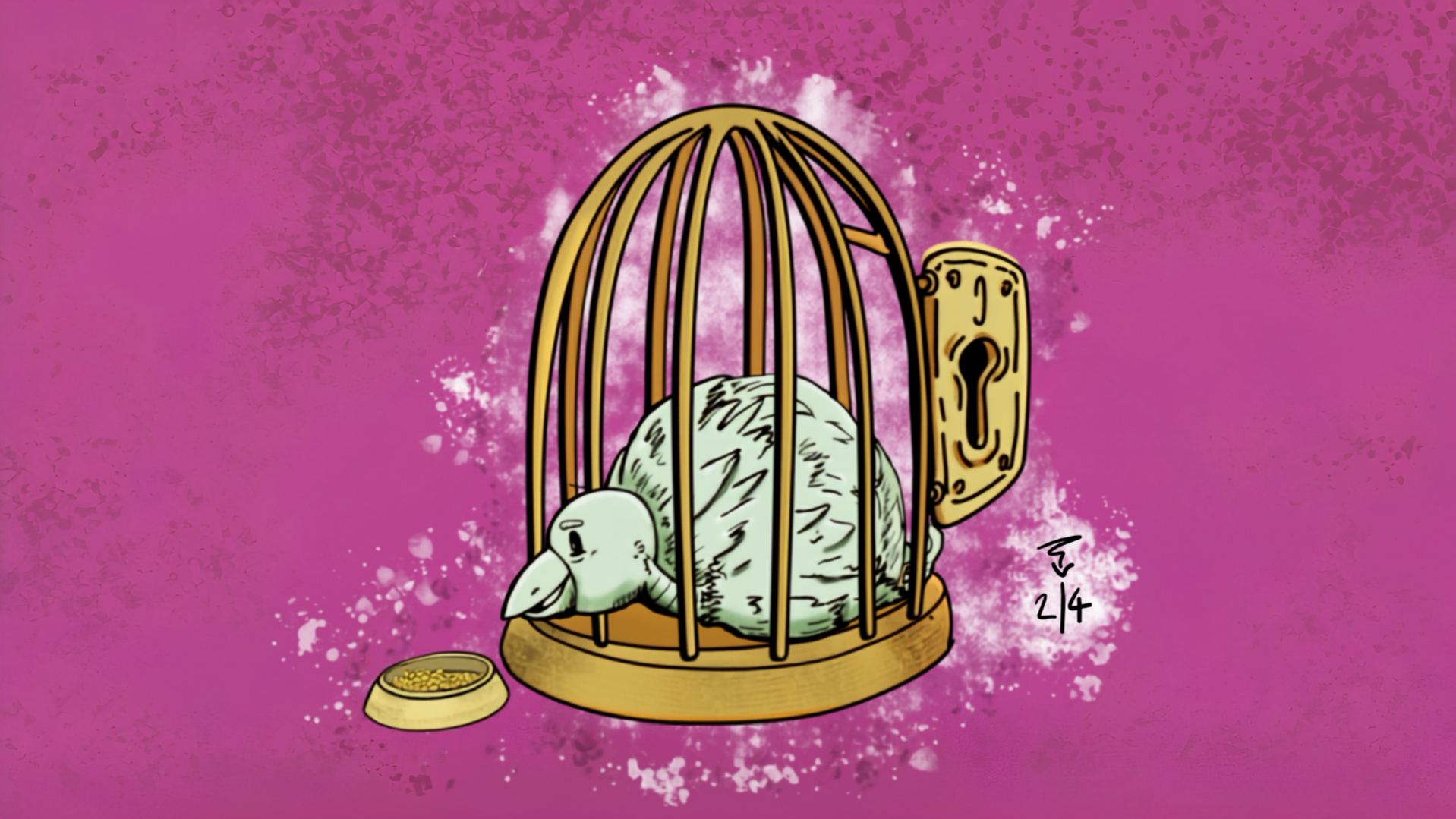
For clarity’s sake, think of flour milling as a metaphor for the Lesotho literary tradition to see how our reliance on the same archival texts for cultural understanding and our reluctance to write and publish more frames our cultural identity: you grow your own wheat (stories) in your backyard, harvest it, sort through each grain to remove debris, only to surrender the responsibility of how your flour will turn out to the new flour miller in town (another writer) who, beyond your own control or perhaps understanding, will be at liberty to ground the grains and mix in additives during the sifting process. Thus, you spend the next hundred or so years consuming that same processed flour, because it is, after all, food, and food is meant to sustain you. To this end, this opinion piece sets out to undertake a short thematic exploration of the proverbial gilded cage, a circumstance where what is seen as a comfortable or convenient situation at face value, is often marred by imperceptible constraint. It is my opinion that the concept of the gilded cage functions in somewhat of a similar manner in the context of Seetetelane as it does in our real-life contemporary literary scene. This is to say that where a wealthy Seetetelane ignores the repercussions of betraying the daughter of the ostrich egg, no longer going hunting for his sustenance as usual, Basotho too, have in my opinion, brushed off the impending repercussions of not writing their own stories by habit without anticipating that like Seetelane’s so-called wealth, our culture will disappear, leaving us little to no freedom and control over our present and future.
To clue you in, the tale of Seetetelane exists across various African literary traditions. In the Lesotho context, it is a tale of a poor bachelor who finds an ostrich egg to eat, but through magic, it cracks to reveal a woman. The ‘daughter of the ostrich egg’ becomes his wife in the version of the tale I remember. In Jacottet’s transcription, the woman produces bread and beer and grants him wealth that hinges on only one condition: he must keep her identity as the daughter of an ostrich egg a secret. Seetetelane does not follow through with his promise while inebriated at a social gathering, so the next morning, poof! the resources that he relied on: the mouth-watering bread, the freshly brewed beer and clothing items made out of plush jackal’s fur—all gone instantly. The tale sounds familiar because Seetetelane’s bad fortune is a scare tactic our elders have used to either encourage us to learn to keep a secret, to sustain ourselves, or to show us, as the Basotho saying goes, that leruo la motho ke ntho e fetang kapele, joale ka phoka ha letsatsi le e chabela (Sekese 106)—A person’s fortune is as fleeting as the morning dew when the sun shines upon it.
Speaking of the dreaded themes of habit, dependency and sustenance, the popular metaphor of the bird in a gilded cage is purportedly based on the living conditions of pet canaries in the 1900s, spoiled with copious amounts of food and petted affectionately by middle-class families from behind ornate cages. These birds were typically secure in their routine, yes, but kept in such restrictive environments that they would lose their survival instincts, rather leaning into the dependency, safety and habit that their circumstances have thrust upon them. By the same token, the tale of Seetetelane demonstrates how susceptible human beings too, can be to falling into the same trap because of adverse socio-economic circumstances. The night after betraying the daughter of the ostrich egg, an intoxicated Seetetelane indulgently lies on the very emblem of his wealth, the opulent mat, while his soon-to-be-estranged wife plans to snatch it away before morning. As children, this particular turning point of the narrative sounded unrealistically silly, because who gains all of that luck and still manages to make a mess of things?
It turns out that the tale is neither unrealistic nor silly to me as an adult, what with those reports that circulated in 2020 about the tragic burning of books at one of Lesotho’s oldest book centres in Mazenod. The national loss, I realised, had made me feel that same disorientation Seetetelane feels when the daughter of the ostrich egg quite literally pulls the rug from underneath his feet. This feeling often descends upon me when I try to learn more about mekhoa ea Basotho—Basotho Customs for instance, and then search engines or libraries do not offer the detailed information I need, or when the few remaining eyewitnesses of momentous events undergo memory loss or pass away. Believe it or not, the preface of Jacottet’s The Treasury of Ba-suto lore observes, with urgency, the country’s need to document the present and make today’s events tomorrow’s history. He implies that even in 1908, that task was a challenge because of the influx of European ideas and the modern changes happening all over the country. That is, of course, not to say that the Lesotho literary landscape—in all its various forms—is barren, with writers like Azariele Sekese, Thomas Mofolo, and others having contributed what I consider to be outstanding work.
As I see it, the tale of Seetetelane does not condemn greed for material wealth alone, but implicitly criticises his evasion of responsibility, his lack of foresight, and like a canary in a gilded cage, his passive acceptance of the hand he was dealt. It is worth mentioning that through habit and the passive acceptance of our socio-economic circumstances, Basotho are (and I will deliberately borrow a term from Jacottet’s transcription to say this) ‘sleeping luxuriously on a mat’, in other terms, ignoring the reality of something more consequential looming on the horizon insofar as cultural extinction is concerned. Without confronting our poor writing and reading culture and our disinterest in endorsing the only few writers and academics we have, I worry that contemporary Lesotho literature will continue to be inaccurately identified as an extension of South African literature rather than a self-contained tradition.
The tale ends with Seetetelane waking to find himself lying on the ground, covered in field mice skins and stretching his arm to confirm whether the daughter of the ostrich egg is still lying beside him. Burdened by the revelation of his impoverishment and the absence of the daughter of the ostrich egg, he shouts to no one in particular what you may be thinking after reading this opinion piece, and rightfully so:
‘Dear me! [...] What shall I do?’.
Works Cited
Gourley. Catherine. Gibson Girls and Suffragists: Perceptions of Women from 19 to 1918. Minneapolis: Twenty-First Century Books, 2008.
Gray, Stephen. “Literature in Lesotho: Some Reports.” World Literature Today, vol. 72, no. 1, 1998, pp. 49–54. JSTOR, https://doi.org/10.2307/40153533. Accessed 6 May 2026.
Jacottet, Édouard. The Treasury of Ba-suto Lore; Being Original Se-suto Texts, with a Literal English Translation and Notes. Morija: Morija Sesuto Book Depot, 1908.
Naidu, Samantha. Transcribing Tales, Creating Cultural Identities: An Analysis of Selected Written English Texts of Xhosa Folktales. 2000. Rhodes University Department of English, Master’s Thesis. Research Repository.
Sekese Azariele. Mekhoa Le Maele a Basotho. Morija: Morija Sesuto Book Depot, 1907.
Shava, Piniel Viriri, & Kolobe, Lesole. “The Mofolo effect and the substance of Lesotho literature in English”. Tydskrif vir Letterkunde, vol. 53, no. 2, 2016, pp 39-47, https://doi.org/10.17159/tvl.v.53i2.3 Accessed 6 May 2026.