The Scar
There are moments that teach you how small your body is against the machinery of the world.
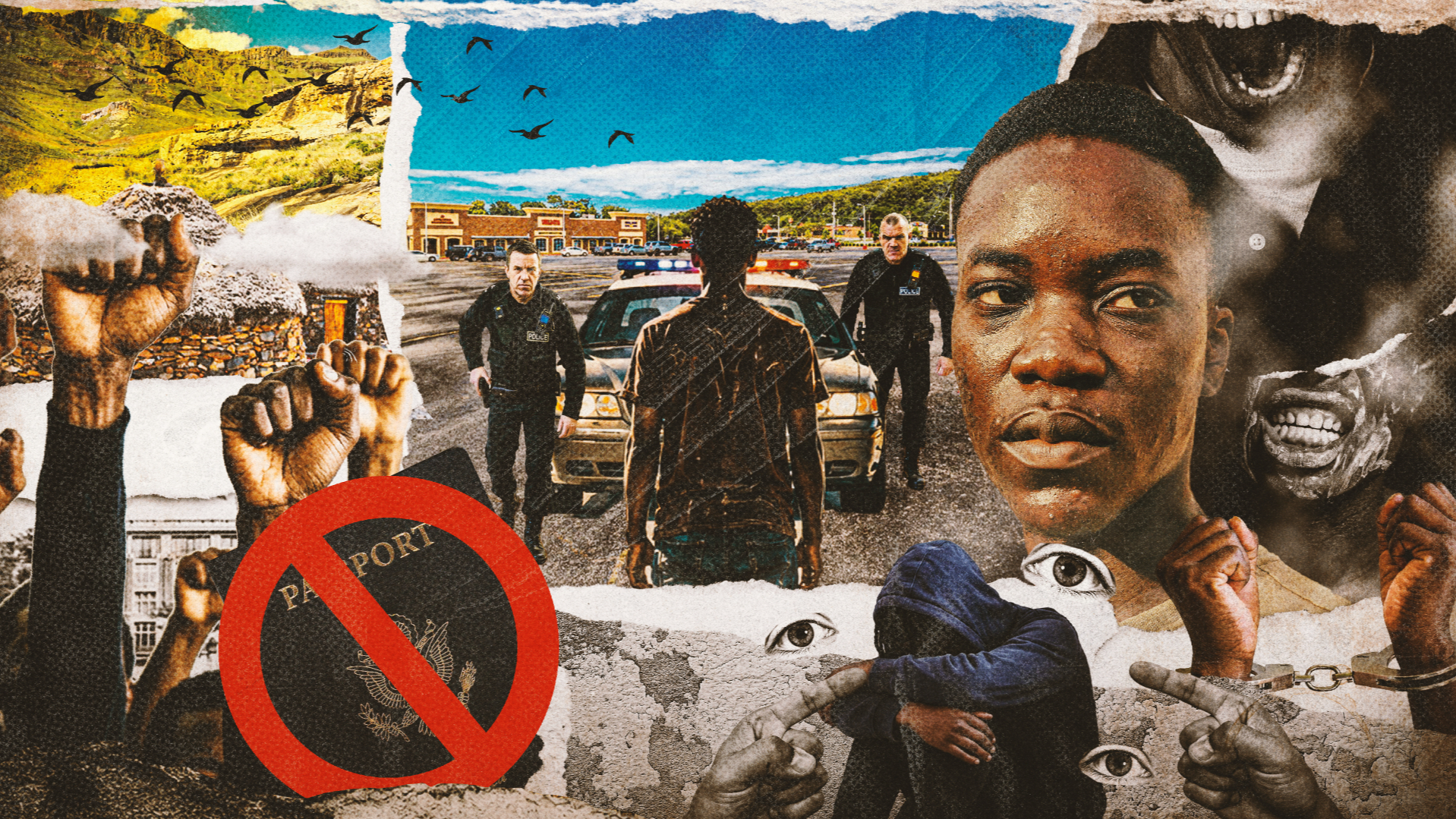
One afternoon, in the dry throat of a Fayetteville parking lot, the kind with sun-bleached lines and vacant spaces that echo with heat, a car came charging towards me. Not merely driving. It came huffing and puffing, breathing hot and heavy; a wounded beast roused from its den, drunk on its own sense of purpose.
I did not move.
There are silences that feel like thought. Then there are silences that feel like a verdict. This was the latter. The air around me held its breath. Even the cicadas choked back their endless, electric song. It wasn’t just the speed of the car; it was the intention braided into that speed, the way the tires scraped the concrete with a growl that split the hour wide open.
If it had a snout, it would have been snarling.
If it had fangs, they would have glinted in the Arkansas sun.
I stood still.
Not because I wanted to. Not because I was brave. I stood still because something inside me—older than fear, more primal than logic—had turned to stone. My feet, wrapped in their black-and-white Converse like the hooves of a startled animal, rooted themselves to the earth. I couldn’t have moved if I wanted to.
And yet, even in my stillness, I was seen.
There is a terrible weight in being seen not for who you are but for what you are presumed to be. In that moment, I felt it—the stare of something ancient, something that has made a language of suspicion. The car was no longer just a car; it was a vessel for an old American hunger.
The sun pinned the scene into focus like a spotlight on a stage I hadn’t agreed to step onto. And yet, here I was—centre frame, locked in, a reluctant protagonist in someone else’s script.
The vehicle screeched to a halt, its breath of dust rushing my way, coating my shins and painting me into the landscape. The smell of burnt rubber lingered, acrid and sharp, as though even the ground had been branded by the arrival.
Then the doors swung open.
Two officers emerged, one moving with the casual intimacy of a man familiar with power. His fingers trailed along the hard outline of his holstered gun, almost tenderly, like a hand resting on the hilt of prophecy. The other officer’s gaze was more surgical, scanning me from head to toe as though searching for the outline of guilt beneath my skin.
No one spoke at first. The silence was an instrument, and they played it well.
When one of them finally did speak, his voice was flat and official, a sound stripped of any excess humanity:
“Sir, we need to see your identification.”
The word Sir should have been neutral. Instead, it carried a strange distortion, dipped in acid before it left his mouth. A word meant to civilize, but in his tone, it was little more than a leash.
In my head, a voice whispered:
This is how the law comes to collect itself.
This is how men disappear.
I moved slowly.
I don’t know if it was instinct or ritual—this choreography of caution. My hands rose with exaggerated clarity, as if I was performing for a distant audience. My fingertips trembled in their own orbit.
“Slowly,” the officer added, his hand now fully resting on the gun at his hip.
“In plain view. I need to see everything.”
Everything.
What a word.
A word that opens its jaws and swallows you whole.
I reached for my rucksack. Inside, there was no ID—only a folded, frayed scholarship document (DS-2019 form) with my name neatly typed at the top. My proof of belonging.
The second officer examined it with visible disdain. “This doesn’t amount to much,” he said, and my pulse dropped like a stone into a dark well.
I spoke—my words stumbling over themselves like small animals running for cover. I told them I lived nearby. That I was walking to get my student ID. That I had arrived two weeks ago for a Fulbright pre-academic programme at the University of Arkansas, Professor Gwen Sullivan’s class, English department. That after this, I was heading to upstate New York for an MFA in Film at the Rochester Institute of Technology.
Their questions didn’t come in curiosity; they came in challenge.
“What’s your name again?”
“Where exactly are you from?”
“Lasut?”
“Lesotho,” I said, each syllable pronounced like I was trying to keep it from slipping away. “L-E-S-O-T-H-O.”
The word felt alien in my mouth now, as if I was naming a distant planet no one had ever seen.
“Never heard of it. That’s in South Africa? Southern Africa? You said school? English? Only two weeks, huh?”
I nodded. My tongue was tired from proving its innocence.
Eventually, they let me go. No apology. Just a shrug—an offhand explanation that someone in the area had been reported waving a gun. I “sort of” matched the description.
Sort of.
How elastic that phrase is. How casually it reshapes the borders of what is permissible. How many lives has it pressed into its service?
Sort of.
I carried those two words with me like a stone in my pocket, their edges sharp enough to break skin if I pressed too hard. That night, lying in my apartment bed, I mouthed them again and again, as if repeating them would dull their sting.
Sort of.
What does it mean to “sort of” match the description of a man with a gun?
It means I could have been anyone.
It means I was no one in particular.
It means that in their eyes, my face could stretch and blur until it fit the outline of a fear they already knew by heart.
The phrase was both specific and bottomless, as elastic as a net cast over dark water. You cannot argue with it; you cannot escape it. You only hang there, suspended, waiting to see if they reel you in or let you drop.
I turned the phrase over and over in my head, examining it the way you examine a scar in the mirror: first with disbelief, then with fascination, then with a quiet, grim acceptance.
There are many ways to be erased. Some are quick and final, the kind that leave headlines and vigils. Others are slower, more insidious—a small daily abrasion against the skin of your existence until you begin to wonder if perhaps you were only ever “sort of” here at all.
And that is what I thought about, as I stared at the ceiling of my apartment that night in Fayetteville.
The hum of the air conditioner was the only sound. I thought of the car. The dust. The officer’s hand grazing the hilt of prophecy. I thought of how a fraction of a second, a misread gesture, or a twitch in my shoulder might have been enough to turn “sort of” into “definitely.”
The room was dim. The light from the parking lot leaked through the blinds in thin, fractured lines, carving my walls into stripes of shadow and glow. It felt like I was lying at the bottom of a cage, staring through the bars.
And still, I could not sleep.
I remembered Professor Gwen Sullivan’s words earlier that week.
“Bring me a scar,” she had said.
“Something small. Something with a beginning and an end.”
At the time, I thought of physical wounds—scabs I’d picked as a child, a faded line above my knee from a fall off my cousin’s bicycle. But lying there in the dim glow of the room, I realised: scars are not only for the skin.
Some scars are made of language.
“Sort of.”
I imagined it like a brand, a hot iron pressed into my chest by unseen hands.
Sort of guilty.
Sort of dangerous.
Sort of alive.
And this, I realised, was not just my story.
Tamir Rice was “sort of” a threat.
Philando Castile was “sort of” reaching for a gun.
Breonna Taylor was “sort of” in the wrong place.
Elijah McClain was “sort of” suspicious.
Sort of.
Sort of.
Sort of.
I closed my eyes and thought of how casually those words must move through the rooms where such judgments are made, how they must slip off tongues like coins tossed into a well: small, simple, but heavy enough to drown you.
The next day, I walked through Fayetteville differently.
The sky was still wide and American, endless and blue, but now it pressed down on me with an invisible weight. I kept seeing the car. I kept seeing the officers. I kept hearing the words “sort of” echo like a verdict in the hollows of my chest.
At the crosswalk by the corner of Dickson Street, a siren howled in the distance. I froze—not visibly, but inside, where it counts. The world seemed to split for a second. One part was ordinary: cars rolling, students laughing with backpacks slung carelessly over their shoulders, a man in a baseball cap jogging across the street. The other part was sharp, cold, and watchful, as if an unseen eye had tilted towards me.
I walked faster.
The American air is full of ghosts.
That afternoon in class, when it was my turn to share, I stood up and said:
“My scar is not on my skin.”
The room went quiet.
“You wouldn’t see it,” I said, “even if I stripped down to the bone.”
And then I told them. I told them about the car, and the officers, and the dust. I told them about the scholarship document that wasn’t enough. I told them about “sort of.”
When I finished, no one laughed. They didn’t even look at me with pity. Instead, there was something else in their eyes—something that felt closer to a kind of recognition. As though they didn’t need to live my story to feel its shape pressing against their ribs.
One of them raised her hand. “What happened next?” she asked.
I opened my mouth, but I didn’t have an answer. Because nothing happened next. I was here. That was the whole story. I was here, but I was also somewhere else. Stuck inside that “sort of.”
And maybe that was the real scar.
The thing about scars is that they are deceptively quiet.
They do not throb like open wounds. They do not scream for attention. They sit there, mute, sealed, and unassuming, until one day you notice the way they warp the light—how they catch and hold it differently than unmarked flesh.
“Sort of” was like that. It was not loud. It did not bleed. It didn’t need to.
Because it had already altered something in me.
In the days that followed the parking lot, I found myself walking differently. Not consciously at first—just small, subtle recalibrations. My hands stayed visible when I crossed the street. I moved slowly in gas stations. I rehearsed explanations in my head before I entered a room, just in case.
Sometimes I imagined the car coming at me again, sun in my eyes, the officers stepping out with their practiced calm. I imagined a different version of myself—one who twitched wrong, who reached too quickly, who laughed at the wrong time.
I imagined him dead.
This is not melodrama. This is mathematics.
In America, Black survival is an equation that always contains subtraction: one wrong gesture, one unlucky angle, one “sort of.”
And I kept turning that phrase over and over in my head, the way a tongue worries a broken tooth.
Memory is not linear. It moves in echoes.
The parking lot did not simply sit where it belonged—in Fayetteville, on that sun-bleached afternoon. No. It stretched its roots backward into my childhood in Maseru, where I watched my mother lower her voice when the police walked past. It reached forward, too, towards the faces on the news—Tamir, Breonna, Elijah—as if they were all standing beside me that day, their shadows overlapping mine.
There are moments that teach you how small your body is against the machinery of the world. That parking lot was mine.
And yet, I couldn’t stop noticing the beauty in it.
I know how strange that sounds, but it’s true. The sunlight that afternoon—hot, merciless—felt almost divine in its indifference. The officers’ hands, one resting on a weapon, the other rifling through my scholarship document, looked like choreography. Even the dust, when the car stopped short of me, rose in a halo around my legs, shimmering like ash.
Perhaps this is what my editor, Moso Sematlane, means when he says I render horror beautifully. But I don’t know if it is beauty, or if it is simply the only way I know how to survive it—by folding it into language until it can no longer crush me.
Joan Didion once wrote that we tell ourselves stories in order to live.
I think some of us also tell ourselves stories in order not to die.
“Sort of” became a story.
I began to imagine it as a courtroom where language itself was on trial.
If I stood before a judge and said: “I matched the description,” it would be over. Case closed.
But if I said: “I sort of matched the description,” what then?
What does justice do with a “sort of”?
It does nothing.
It shrugs.
It calls the next case.
And that shrug is a violence you cannot photograph.
When I told the story again—to classmates, to friends—it began to change shape.
Sometimes I emphasised the car, how it felt alive, almost animal. Sometimes I slowed down the moment the officers stepped out, describing the precise angle of their hands, the gravel in their voices. Each retelling was not an embellishment but an excavation, as if I were digging for something buried in that parking lot, some shard of truth that could explain why I was still here, breathing.
And always, I circled back to “sort of.”
Because that, I realised, is the scar. Not the officers. Not the car. Not even the fear.
The scar is the language.
The words that make it possible to hurt someone without ever admitting you meant to.
One night, while I was alone in my apartment, I opened my laptop and typed the phrase “sort of” into a blank document. I stared at it for a long time. Then I began listing everything it could mean:
—Close enough.
—Not quite.
—Almost.
—Wrong place, right time.
—Right place, wrong time.
—A face blurred by distance.
—A life that doesn’t fully count.
By the time I was done, the page was full. And I realised I could keep going forever.
Because “sort of” is infinite.
And maybe that’s why it still keeps me awake sometimes.
That night in Fayetteville, lying on my back in the dull glow of the apartment, I stared at the ceiling and tried to understand what had shifted.
Not just what had happened—but what had changed.
Before America, I had not thought of myself as someone to be feared.
I grew up as a herdboy in the rural outskirts of Maseru, Lesotho, in a land of dust and hills, where most of the people looked like me, and where suspicion had little use for skin. My childhood was measured in footsteps and sunrises, in the time it took for cattle to chew their way across a ridge, in the way shadows grew longer across the veld in the late afternoon.
My companions were the wind, my sarisi herding stick, and the hush of grazing animals. Out there, the world did not look at you—it surrounded you. It made space for you, without question. My existence belonged to the earth and to no one’s interpretation.
I remember one particular day. I must have been eleven.
The herd had settled along a quiet slope just above the stream that curved through our village. The sun was beginning to fall, the light softer now, scattered across the stones like silk. I lay back on the ground with my hands folded behind my head. The cattle chewed lazily, their stomachs full, their eyes half-closed. The only sounds were the dull flick of a tail swatting flies and the occasional snap of a twig under a hoof.
Above me, a cloud drifted in the shape of something familiar—maybe a bird, maybe a pot. It didn’t matter. I was neither here nor elsewhere. I was simply...being.
There was no urgency. No sense that I needed to explain myself to anyone. No stranger was watching me from a distance, narrowing their eyes to see whether I was harmless or not. I was a boy. That was all.
The stillness wasn’t just around me. It was inside me.
It never occurred to me that there might be places in the world where the colour of your skin could enter a room before you did. Where your face could be a stand-in for someone else’s nightmare. Where your presence could be bent and distorted by the gaze of a stranger.
In that field, I was invisible in the most beautiful way—not erased, but unthreatening. Unjudged. Undissected.
That was the world I came from.
And then I arrived in the other one.
Fayetteville was my first American city, it was the first place where I felt the full weight of being seen and not recognized. The first place where my body seemed to alter the room around it—just by existing.
In that parking lot, I was no longer the boy with a stick and a gap-toothed smile. I was not a student. Not a visitor. Not a man with a future.
I was a possibility. A sort of.
A shape that might be danger.
And that was the rupture—between the world that had held me in silence and sun, and the one that now gripped me in suspicion.
The scar was no longer just mine.
That realisation came slowly, like water seeping through old wood. It came in quiet rooms where news anchors recited names like prayers. It came in classrooms where silence felt heavier than speech. It came in late-night conversations with other Black students who laughed too loudly at jokes that weren’t jokes at all, but a way of saying: We see it too. We live inside it.
What happened in that Fayetteville parking lot wasn’t just a single encounter between me and two police officers. It was an event woven into a much larger fabric—an old, threadbare cloth of history and habit, patched and re-patched with “sort ofs,” “maybes,” “misunderstandings,” and “accidents.”
If I pressed my fingers against the scar hard enough, I could feel the pulse of something vast moving beneath it. Something older than me.
When I was a boy in Maseru, my mother warned me about dogs.
“Don’t run,” she’d say. “If you run, they’ll chase you. Stand still. Make yourself small. They’ll lose interest.”
I used to think this was only about animals. I know better now.
Fear, I’ve learned, is inherited. It passes down like recipes or family names. My mother’s warnings about dogs carried an unspoken second meaning, one she didn’t need to explain: don’t provoke anything bigger than you. Don’t give it a reason. Move carefully in the world, because the world is not neutral.
In America, that lesson sharpened into something more precise. It was no longer about hypothetical danger. It was about survival.
The parking lot was not my first brush with fear, but it was the first time I understood it as something architectural—built into the structure of a place, as invisible and immovable as steel beams.
I realised then that I was not just an individual walking across hot concrete. I was a figure—one of many—moving inside a blueprint I did not draft. A space where suspicion was a default setting, where Blackness was not a colour but a category, a shorthand that could be misread and weaponized in an instant.
That day, I became hyper-aware of how visible I was, and how invisible too. I was the main character in that parking lot, but I was also just another interchangeable silhouette—“sort of” this, “sort of” that.
It is a strange thing to be reduced to an outline of yourself.
There is a language to all of this.
The officers didn’t say much, but their silence spoke fluently. The hand on the gun spoke. The tilt of the head. The measured pace of their questions.
Language doesn’t only live in words. It lives in posture, in proximity, in who is allowed to move first.
“Sort of” is the most dangerous phrase I know. It’s polite. It’s evasive. It carries its violence cleanly, like a concealed blade. It is the difference between “we shot him because he was dangerous” and “he sort of looked like the guy we were looking for.”
One is a claim.
The other is a fog.
And fog is harder to fight.
I think often about how many Black lives have been swallowed in that fog—how many mothers have been told their sons were “sort of” in the wrong place, or “sort of” reached for something, or “sort of” made a movement someone couldn’t quite explain later in court.
“Sort of” is not a phrase. It is a mechanism. It is how power remains clean while the rest of us stay marked.
Sometimes, late at night, I return to the image of myself in that parking lot—frozen, unmoving, held in the sun’s cruel spotlight.
There was a strange clarity in that stillness, an almost unbearable quiet in which every detail sharpened: the smell of baked concrete, the dust curling at my ankles, the officers’ fingers tightening near their weapons.
In that moment, the world felt stripped bare. There was no why. No grand reason. Only a simple, merciless fact: I was there. They were there. And in that fragile instant, everything I was—student, son, dreamer, man—collapsed into one blunt truth: I was a body being measured.
And yet, somehow, I am still here.
There is no triumph in that sentence. But there is something like defiance.
People sometimes ask why I write the way I do—why even this story, heavy as it is, carries so much metaphor, so much strange and terrible beauty.
I think it’s because beauty is the only way I know how to breathe through it. If I can name the car a beast, I can keep it from devouring me whole. If I can turn fear into a sentence, I can trap it where it can’t run loose in my chest.
This is not fiction. It only looks like it sometimes because it has to.
To survive, I need the world to be shaped into something I can hold. Even if it cuts my hands.
The scar remains.
The scar is language.
The scar is history.
The scar is me, standing in that parking lot every time I close my eyes.
But if I keep writing, maybe I can turn it into something else—not healing, maybe not even understanding, but something like recognition.
And recognition, in this world, is a kind of freedom.
I have walked through many parking lots since Fayetteville.
Different states. Different seasons.
And every time my feet touch painted concrete, I think about that afternoon.
Not always in sharp, cinematic flashes—sometimes it comes as nothing more than a ripple at the edge of my mind. A tightening of my shoulders. A brief pause before crossing open space. A shadow that lengthens and shortens but never vanishes.
Because the thing about scars is: they are not content to stay in the past. They reach forward. They live in the present tense.
When I remember it now, the sunlight is the first thing I see.
It was merciless, that Arkansas sun. It didn’t allow for ambiguity. It sharpened everything—the glint of metal, the trembling in my hands, the officers’ flat expressions—into unbearable clarity.
And yet, what frightens me most is not the clarity but what came after: how easily the world folded itself back into its ordinary shape. How, within an hour, I was sitting in my apartment, staring at my hands as if they belonged to someone else. The car was gone. The officers were gone.
Only the dust remained, clinging to my shins like an afterthought.
That’s how ghosts work, I think. They do not scream or rattle chains. They settle, quietly, into the folds of the everyday. They wait for you in the ordinary—between one step and the next, between one breath and the next—until you understand that you never really left the parking lot. You just carried it with you.
There are two Americas.
The first is the one that insists on its innocence. It speaks in polished phrases: “due process,” “isolated incidents,” “reasonable doubt.” It wraps itself in laws and procedures as if bureaucracy were proof of morality.
And then there is the other America—the “sort of” country.
This is the America where suspicion does not need evidence. Where an officer’s fear is treated as fact. Where Blackness is always an unfinished sentence.
In that parking lot, I lived inside the second America.
It was not a metaphor. It was not a theory. It was the scrape of tires against concrete, the dust biting the back of my throat, the weight of two men deciding if my existence needed explaining.
And yet, when they left, when the scene dissolved, I was expected to step back into the first America as if nothing had happened. As if “sort of” hadn’t already branded itself into me like heat against flesh.
There is a moment I think of often, and it does not belong to me.
A video I once saw of Elijah McClain.
He is apologising—apologising—while they are killing him.
“I’m just different,” he says. “I’m sorry.”
The words are unbearable not because they are unfamiliar, but because I recognise them. They are the words every Black person has rehearsed silently at one point or another: a desperate attempt to become small enough, gentle enough, harmless enough to survive.
When I think of Elijah, of Tamir, of Philando, of Breonna—I see myself in that parking lot, feet pinned to the concrete, body reduced to a single fragile fact: I could be “sort of” anyone.
And that is the violence.
Not only the bullets.
Not only the chokeholds.
But the endless shrinking of a person until they are little more than an outline someone can misread.
People imagine scars as silent things, but this one speaks.
It speaks in sirens, in the hum of fluorescent lights when I walk through an American grocery store and feel a gaze linger too long. It speaks in the way I double-check the location of my wallet before reaching for it in public.
And some nights, it speaks in dreams.
I dream of the car coming at me again—its growl low and certain, its shadow stretching over me like a verdict already written. I never move in these dreams. I just stand there, the sun bleaching me into stillness, while the beast breathes and waits.
When I wake, the room is quiet. The world is calm.
But I know better.
In Professor Gwen Sullivan’s classroom, I once told a room of students that my scar had a beginning and an end. That was a lie.
Scars don’t end. They live on the surface of you, yes—but they also grow roots. They send little tendrils through memory and language until you no longer know where the story ends and where you begin.
If there is any ending at all, it is this:
I am still here.
Not untouched. Not unmarked.
But here.
And maybe that’s enough—not because survival redeems the wound, but because survival is the one thing the wound cannot take away.
Sometimes, in my mind, I return to the parking lot—not as I was, but as I am now.
I see myself standing there.
I see the car coming again, tires clawing at the ground, sunlight blazing down.
But this time, I am not frozen.
This time, I lift my hand—not in surrender, but in acknowledgment.
As if to say: I see you.
I know what you are.
You will not have me, not entirely.
And for just a moment, the scar goes quiet.
Not gone.
Never gone.
Just quiet enough to let me breathe.