The Sea
Smiles plaster the faces of everyone here because they are precisely where they want to be, doing precisely what they want to be doing.
Translated from the Sesotho by Makafane Tšepang Ntlamelle
Read the Sesotho version HERE
You have long wanted to know how far out the road stretches from your home; what becomes of it after it starts to snake about and barrel through the dense thickets in the distance; where it leads after it disappears behind the mountains, the hills, and the knolls. So, one day, you feel it is not enough to simply sit and wonder; one day, you jump in the car, you board the train, and you set out to discover once and for all where it goes.
In the car, you can barely rein in your pleasure as the end of the asphalt starts to come into sight and the blue heap-like sea does, too. In fact, everything you have eyed along the way appears to be delighted as well, to be sodden in glee—including your very car. Moments earlier it was a blazing and rumbling—almost warbling—inferno. Now, though, it is quietly cruising ahead as if it has a mind of its own, and you cannot, for the life of you, get it to slow down. You are as enraptured on the train now that its rattles have all but been replaced by silence as it hurtles forward along the tracks like a racehorse glaring down the path ahead, neighing in joy. At long last, you come to the place where the road leads, you come to town.
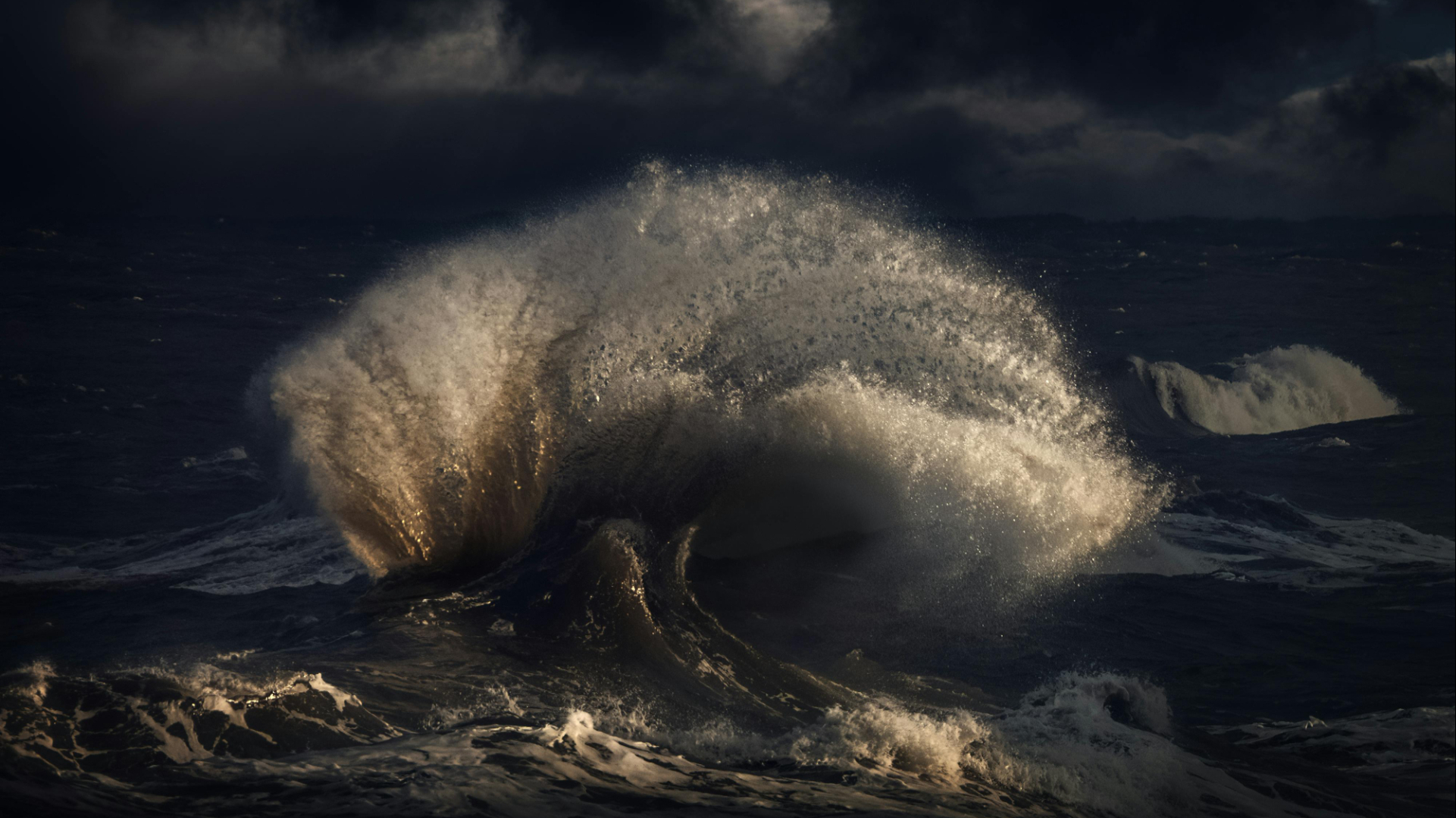
This isn’t your final destination, of course; you keep going on foot until there is no path at all, until there is neither concrete nor gravel. You walk further, towards the shore. You look down and are startled to notice that there is now sand beneath your feet. The water rolls towards them before retreating, and it seems as though it’s teasing you, as though it’s alive. The water, boisterous and foamy. As it crashes into the sand, it spews out a miscellany of treasures and trinkets: shells, both small and large, arresting and ghastly; tiny creatures you’re seeing for the first time that rattle you as soon as you do; and all kinds of fish. The water, burdened and laden.
Up ahead, you spot the waves, which will ultimately swash by your feet. They look like a cluster of ditches—magnificent deep blue ditches. Blotches of white dot the water like the rain-washed fleeces of a herd of goats on a mountainside. Upon closer look, they look like goats phasing in and out of view, even. Further ahead is the point where the water seems to soar and fuse into the sky. What’s it like even further into the water, you ask yourself. What do you see when you’re smack in the middle of the water? Your train of thought is suddenly broken by the chatter and noise around you.
Of course, there isn’t a single moment when this place isn’t teeming with people, some of whom dive into the waves before they break and are thrilled to be turned upside down and yanked back onto the shore. They are looking forward to returning home with sand in their hair, exhausted, and hungry, and happy (because ‘curious are the things that bring us joy’). Others roam the shores completely nude while others have on mere swimsuits—even the Africans. Quite a number of them wouldn’t be caught dead in the skirts and loincloths of their ancestors, and yet here they are now on the sand with nearly every inch of their bodies out for the sun to roast. Smiles plaster the faces of everyone here because they are precisely where they want to be, doing precisely what they want to be doing.
What is more, whatever money they may have spent years saving for this is gone now. It has been squandered as though it had been simply picked off the ground like the shells you saw earlier. This makes sense considering this place doles out in an hour excitement you may only get throughout many years in other places. This air of extravagance permeates through the shops in town. Come, it seems to whisper to you, sit down and get something to eat. And while you’re at it, you should get something to wash down your meal. Come now, you only live once, don’t you? Indeed, this seems to be the town’s sole reason for being, the life mission of its people: to wait on you hand and foot. As a matter of fact, they ogle at you, these shopkeepers, and shop assistants, and stallholders, and hawkers. Then again, they can’t help it. They tell you how fortunate you are to come from elsewhere, to know a world beyond the town they themselves don’t and may never know.
You make the most of your visit and see every inch of this place, the last being the harbour. In the water before you are an array of ships on which there have been planted flags from faraway lands. In this moment, these places appear to all be not endless kilometres from you but a short stroll away. Cargo is being loaded onto these ships just as it is being unloaded off them. Among these are live cattle. You wonder where they could be headed. Right then, you hear music around the corner, and you follow it. You come before a British battleship. Aboard are white men who are dressed in white uniform. They look like statues of marble. After a while, the singing halts, and the vessel begins to set sail. The men are waving their hats at those they are leaving behind. There is another standing at the farther end of the ship, at the bow. His gaze is turned not to you and everybody else on the land, but towards the sea ahead. He knows that blue. He adores it. What you wouldn’t give to switch places with him.
You can’t help but imagine the journey for those aboard the ship: the hours upon hours on the vast water endlessly swirling and crashing in on itself, the clear and maybe even cloudy skies above, the stars that will light them up at night until, eventually, they reach land again. And, the earth being a globe, this goes and on. Your own trip back home is coloured by sadness and defeat. (That is the way of life, after all, my friend. You’re a conqueror today and a failure tomorrow). One day that’ll be me, you promise yourself. This is your one hope. And what would the human race be without it?